5 Uncomfortable Questions Zero to One Still Asks in the 2026 AI Era
A book from 2014 turns out to be the most accurate description of the 2026 AI bubble. Using Peter Thiel's Zero to One framework to diagnose why 99% of AI startups fail.
5 Uncomfortable Questions Zero to One Still Asks in the 2026 AI Era
What if a book from 2014 describes the 2026 AI bubble more accurately than anything written today?
Using Peter Thiel's framework to diagnose why 99% of AI startups are destined to fail.
What if a book written in 2014 turns out to be the most accurate description of the 2026 AI bubble?
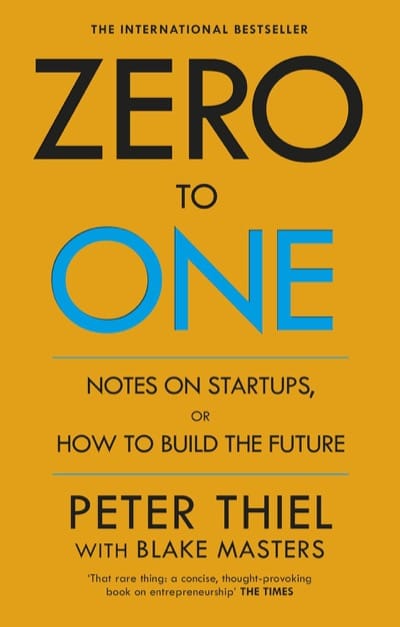
Peter Thiel's "Zero to One". Hailed as the Silicon Valley startup bible, this book can feel a little obvious at first — "innovate," "monopolize," "think differently." You've heard it all before.
But look at where we are in 2026. Hundreds of AI startups launch every day, and hundreds die every day. Thiel's warnings from a decade ago are playing out with uncanny precision.
"99% of AI startups will be dead by 2026" — why is this happening?
The answer, surprisingly, was all in this decade-old book.
1. "Competition Is for Losers"
This is Thiel's most provocative claim — and his most misunderstood.
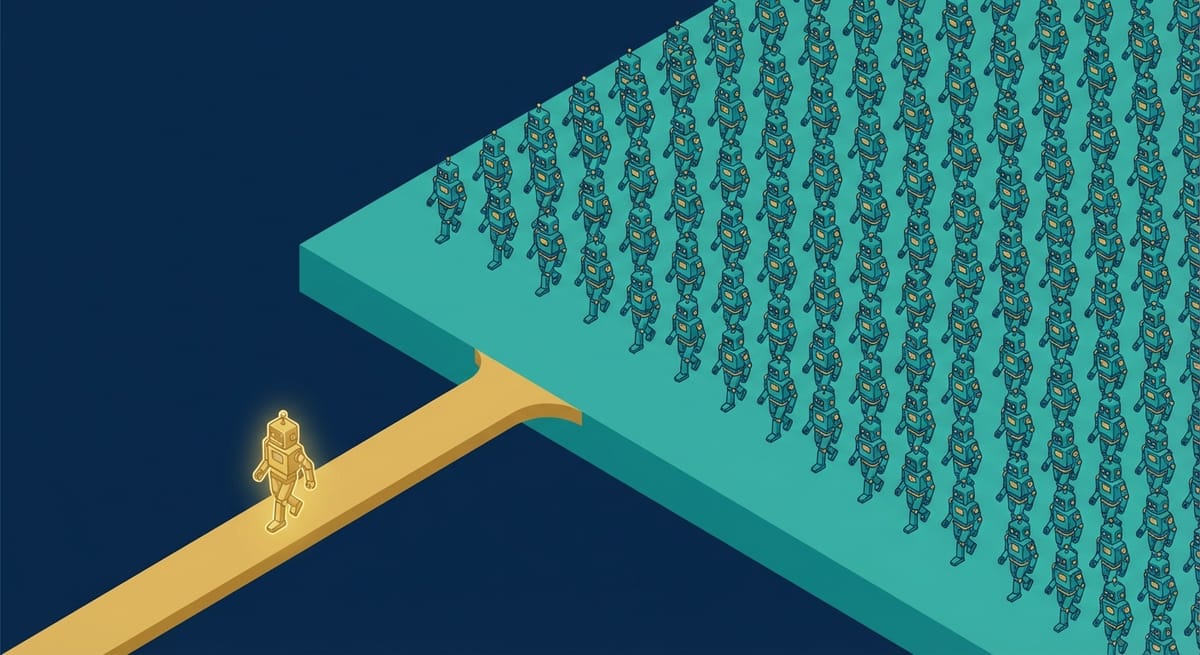
Take a look at the AI market in 2026. How many ChatGPT-wrapper startups exist right now? Too many to count. "AI writes your emails." "AI manages your calendar." "AI summarizes your meetings." Every single one is a different UI sitting on top of the same foundation model.
In Thiel's terms, this is all 1→n — not 0→1. It's copying what already exists with a thin coat of paint.
VentureBeat called it "the great AI wrapper extinction." The moment a big-tech platform ships a native update, single-purpose AI agents charging premium prices get absorbed overnight.
That's not a hypothetical. It happened two weeks ago.
In February 2026, Anthropic launched Claude Cowork — an agent that can directly access your filesystem, read, edit, and organize files on its own.
Alongside it came 11 open-source plugins covering legal contract review, CRM data entry, and financial auditing. The result: SaaS stocks shed $285 billion in a single day. Wall Street dubbed it the "SaaSpocalypse."
Automated NDA review? That was legaltech's job. Lead generation with personalized outreach? That was sales SaaS. One update rendered dozens of entire product categories obsolete.
Exactly what Thiel warned about a decade ago: build 1→n, and the moment a platform absorbs your feature, it's over.
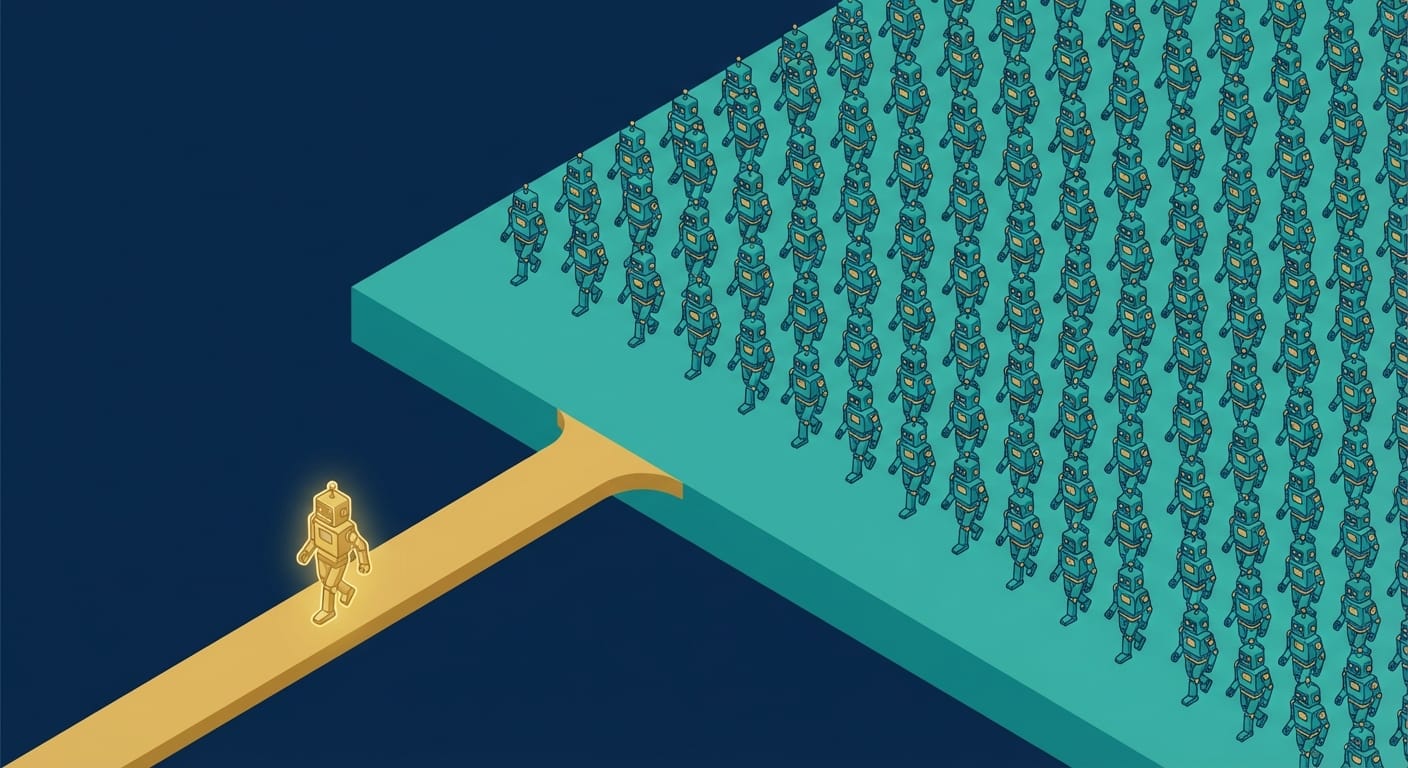
"What secret do you see that nobody else does? Why are you building a product that disappears the moment Anthropic ships its next plugin?"
2. "Last Mover Wins"
Thiel argues that last-mover advantage matters far more than first-mover advantage. Google was the 11th search engine — and became the last. Facebook wasn't the first social network — but it finished the game.
In AI? OpenAI got there first. But the last mover hasn't arrived yet.
Thiel's own portfolio moves in 2026 prove the point. He dumped all his Nvidia shares and shifted heavily into Microsoft (34% of portfolio) and Apple (27%) — rotating out of hardware and infrastructure bets and into the application layer.
Thiel also said it will take 15 to 20 years for AI to become "super dominant." While everyone else debates when AGI arrives, the person with the longest track record in tech is playing a very different time horizon.
3. "Every Great Business Is Built on a Secret"
Thiel's view: the world still contains undiscovered secrets, and the companies that succeed are the ones that find them first.
Most AI startups in 2026 aren't finding secrets. They're stacking UIs on top of public APIs. That's not discovery — it's assembly.
So what are AI's real secrets?

1. AI isn't replacing "tasks" — it's replacing decision-making structures
→ The real transformation is how organizations make decisions, not just what they automate
2. The real bottleneck in AI isn't compute — it's data access
→ Foundation models are converging; differentiation will come from proprietary data
3. Consumers don't want AI — they want outcomes
→ "AI-powered" as a marketing claim is about to become meaningless
4. "Be a Definite Optimist"
Thiel draws a sharp line between two kinds of optimism:
- Definite Optimist: believes the future will be better — and has a concrete plan to get there
- Indefinite Optimist: believes the future will be better — but has no idea how
Most AI startups in 2026 fall into the second camp. "AI is the future, so something will work out." "The market's huge, so we'll get a slice." If you can't articulate exactly what you'll look like in three years — and precisely why you survive when others don't — you've already failed Thiel's test.
5. The 7 Questions Self-Assessment — AI Startup Report Card
Thiel laid out seven questions every successful startup must be able to answer. Here's how today's AI startups hold up:
| Question | Thiel's Standard | 2026 AI Startup Reality | Pass? |
|---|---|---|---|
| Technology | 10x better than existing solutions | Most are just wrappers around existing models | X |
| Timing | Is now the right moment? | AI itself? Yes. The wrapper market? Saturated. | △ |
| Market | Dominate a small market first | "AI for everyone" — way too broad | X |
| Team | Can only this team pull it off? | Most teams are interchangeable | X |
| Distribution | A clear path to customers | Product Hunt launches + hoping for virality | X |
| Durability | Defensible for 10–20 years? | One OpenAI update away from irrelevance | X |
| Secret | An insight others don't have | Everything is in the public API docs | X |
Six out of seven: fail. Brutal — but this is exactly why 99% don't make it.
What to Take Away vs. What to Ignore
Rating & Who Should Read It
A decade-old book that reads like it was written yesterday.
That's its real value. It doesn't chase trends — it teaches you how to see structure.
Sources
- - Stop calling it 'The AI bubble' — VentureBeat
- - 99% of AI Startups Will Be Dead by 2026 — Medium
- - Peter Thiel Shifts His AI Bet — Motley Fool
- - 8 Signs the AI Bubble May Pop in 2026 — PCWorld
- - Why one Anthropic update wiped billions off software stocks — Fast Company
- - Anthropic's Claude triggered a trillion-dollar selloff — Fortune